Strategic Debt Reduction: 12-Month Plan to Save 15% Interest
Advertisements
High interest rates continue to stretch household budgets across the U.S.
Strategic Debt Reduction breaks down actionable refinancing methods, balance transfer tactics, and payoff prioritization strategies to cut interest costs over the next year.
Understanding the Current Debt Landscape
The current U.S. financial environment presents both challenges and opportunities for debt management, with rising interest rates impacting various loan types.
Many consumers are grappling with increased monthly payments, making a Strategic Debt Reduction Plan more critical than ever.
Recent economic indicators suggest that while inflation is moderating, borrowing costs remain elevated, underscoring the urgency for proactive financial strategies.
Understanding the nuances of your existing debt portfolio is the first step toward effective interest savings.
Experts emphasize that a clear picture of all outstanding debts, their interest rates, and minimum payments forms the bedrock of any successful debt reduction initiative.
Without this foundational knowledge, optimizing payments becomes a speculative endeavor rather than a strategic one.
Analyzing Your Debt Portfolio
Before embarking on any debt reduction strategy, a thorough analysis of all outstanding debts is essential. This involves compiling a detailed list of every loan, credit card, and financial obligation, noting key terms and conditions.
Identifying high-interest debts is crucial, as these typically represent the largest drain on financial resources.
Prioritizing their repayment can yield the most significant interest savings over time, a core component of a successful Strategic Debt Reduction Plan.
- List all outstanding debts: credit cards, personal loans, mortgages, auto loans, student loans.
- Note current interest rates: identify variable vs. fixed rates.
- Record minimum monthly payments and total outstanding balances.
- Understand payment due dates to avoid late fees and further interest charges.
The Impact of Interest Rates on Debt
Interest rates directly influence the total cost of borrowing, with higher rates leading to substantially larger overall payments.
Even small differences in interest percentages can translate into thousands of dollars over the life of a loan, particularly for large balances.
The Federal Reserve’s monetary policy decisions have a ripple effect across the economy, influencing everything from credit card APRs to mortgage rates.
Staying informed about these trends can provide context for your Strategic Debt Reduction Plan.
For consumers, this means that every percentage point saved on interest directly contributes to their financial well-being, freeing up capital for other investments or savings.
This direct correlation highlights the importance of an effective debt reduction strategy.
Developing Your 12-Month Strategic Debt Reduction Plan
Crafting a personalized 12-month Strategic Debt Reduction Plan requires a clear understanding of your financial inflows and outflows, coupled with a commitment to disciplined execution.
This plan is designed to be adaptable, allowing for adjustments as your financial situation evolves.
The core principle involves allocating additional funds towards debt repayment, specifically targeting high-interest obligations first.
This systematic approach ensures that every extra dollar makes the maximum impact on reducing your overall interest burden.
Success hinges on consistency and a willingness to re-evaluate and refine your strategy throughout the year, ensuring you stay on track to achieve the ambitious goal of 15% interest savings by 2027.
Budgeting for Accelerated Payments
A realistic and comprehensive budget is the cornerstone of any effective Strategic Debt Reduction Plan. It allows you to identify areas where spending can be reduced, freeing up additional funds for debt repayment.
Tracking every dollar spent helps reveal unnecessary expenditures that can be redirected towards your debt goals.
This granular approach to budgeting ensures that no potential savings are overlooked, maximizing your capacity for accelerated payments.
Implementing a strict budget doesn’t mean sacrificing all discretionary spending, but rather making conscious choices that align with your financial objectives. This disciplined approach is vital for the Strategic Debt Reduction Plan.
- Create a detailed monthly budget, categorizing all income and expenses.
- Identify non-essential spending that can be reduced or eliminated.
- Allocate any surplus funds directly to your highest-interest debts.
- Regularly review and adjust your budget to reflect changes in income or expenses.

Choosing the Right Debt Reduction Method
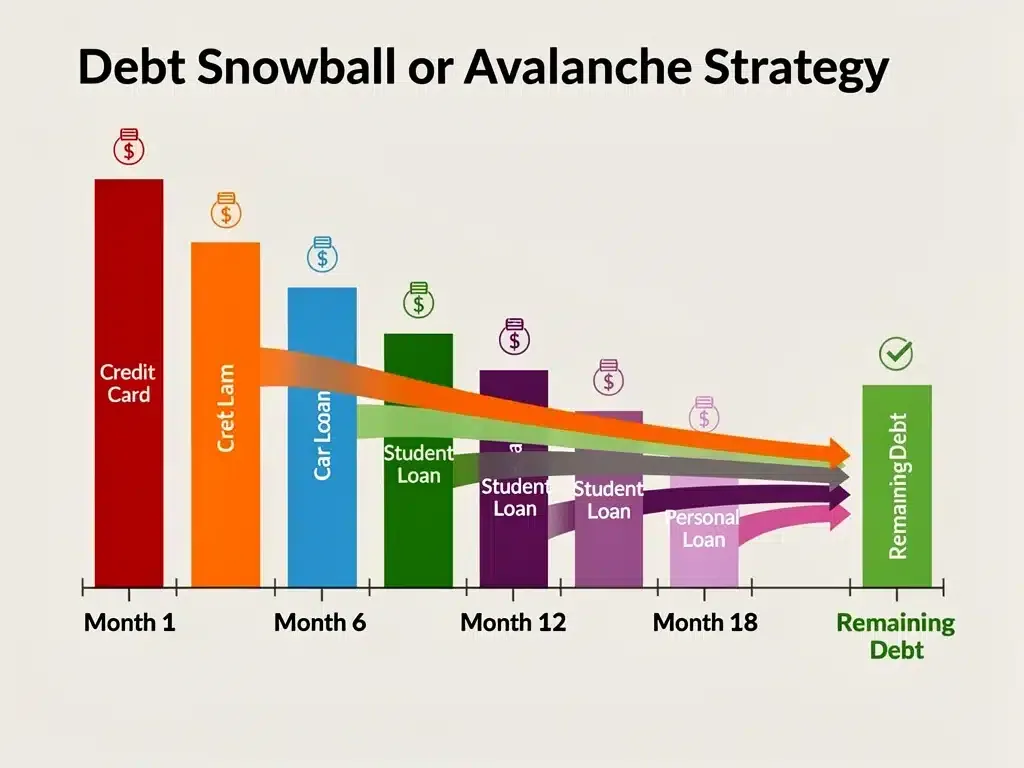
Two primary strategies dominate the landscape of accelerated debt repayment: the debt snowball method and the debt avalanche method.
Each offers distinct psychological and financial advantages, and the optimal choice depends on individual preferences.
The debt snowball method focuses on paying off the smallest debts first to build momentum, providing psychological wins that can sustain motivation.
Conversely, the debt avalanche method prioritizes debts with the highest interest rates, leading to greater financial savings over time, which is key for a Strategic Debt Reduction Plan.
Understanding the pros and cons of each approach is crucial for making an informed decision that aligns with your financial personality and overall objectives for interest savings. Both methods are effective when consistently applied.
Leveraging Financial Tools and Resources
The modern financial landscape offers a plethora of tools and resources designed to assist individuals in their debt reduction journey.
Utilizing these effectively can significantly enhance the efficacy of your Strategic Debt Reduction Plan, making the process smoother and more manageable.
From budgeting apps to debt consolidation services, these resources provide valuable insights, automation capabilities, and potential pathways to lower interest rates.
Strategic deployment of these tools can accelerate your progress towards financial freedom.
It is important to research and select tools that align with your specific financial situation and goals, ensuring they complement rather than complicate your existing strategy.
This smart integration is a hallmark of an intelligent debt reduction approach.
Debt Consolidation and Refinancing Options
Debt consolidation involves combining multiple debts into a single, new loan, often with a lower interest rate and a single monthly payment.
This can simplify debt management and potentially reduce overall interest costs, a key objective of a Strategic Debt Reduction Plan.
Refinancing, particularly for mortgages or student loans, allows you to replace an existing loan with a new one, typically with more favorable terms.
Lowering your interest rate through refinancing can lead to substantial long-term savings, directly contributing to the 15% interest reduction target.
Careful consideration of fees, new loan terms, and eligibility requirements is crucial before pursuing consolidation or refinancing. These options can be powerful tools when used judiciously, but require due diligence.
Automating Payments and Tracking Progress
Automating your debt payments ensures consistency and helps avoid late fees, which can derail a carefully constructed Strategic Debt Reduction Plan.
Setting up automatic transfers directly from your checking account can streamline the repayment process.
Regularly tracking your progress is equally important, providing visual evidence of your achievements and reinforcing motivation.
Many budgeting apps and financial management software offer robust tracking features, allowing you to monitor your debt reduction in real-time.
- Set up automatic minimum payments for all debts to avoid late fees.
- Automate additional payments to your priority debt to accelerate repayment.
- Utilize financial apps or spreadsheets to track your debt balances and interest savings.
- Celebrate milestones to maintain motivation throughout the 12-month period.
Monitoring and Adjusting Your Plan Quarterly
A dynamic Strategic Debt Reduction Plan is one that is regularly reviewed and adjusted to reflect changes in your financial situation, market conditions, or personal goals.
Quarterly reviews provide an opportune moment to assess progress and recalibrate strategies.
This proactive approach ensures that your plan remains relevant and effective, maximizing your chances of achieving the targeted 15% interest savings by 2027. Stagnation is the enemy of progress in debt management.
By making informed adjustments, you can navigate unforeseen challenges and capitalize on new opportunities, keeping your debt reduction journey on the optimal path. Flexibility is a key attribute of a resilient financial strategy.
Reviewing Spending and Income
Periodically reviewing your spending habits and income levels is critical for maintaining an effective Strategic Debt Reduction Plan. Life events, such as a promotion or an unexpected expense, can significantly impact your budget.
Adjusting your budget to accommodate these changes ensures that you continue to allocate sufficient funds towards debt repayment without compromising essential living expenses.
This ongoing assessment is vital for sustained progress.
Identifying new opportunities to increase income or further reduce expenses can provide additional ammunition for accelerating your debt reduction efforts. Every extra dollar makes a difference in achieving your interest saving goals.
Evaluating Interest Rate Changes and Opportunities
Interest rates are not static; they fluctuate based on economic conditions and central bank policies.
Regularly evaluating these changes can uncover new opportunities for saving money on your existing debts, directly impacting your Strategic Debt Reduction Plan.
For instance, a significant drop in market interest rates might present an ideal time to refinance a high-interest loan, securing a more favorable rate.
Conversely, rising rates might necessitate a more aggressive approach to paying down variable-rate debts.
Staying informed about these financial shifts empowers you to make timely decisions that can either mitigate potential losses or capitalize on emerging savings opportunities. Proactive monitoring is a cornerstone of intelligent debt management.
Anticipating and Overcoming Challenges
The path to significant debt reduction is rarely without its obstacles.
Unexpected expenses, changes in income, or simply a lapse in motivation can derail even the most well-intentioned Strategic Debt Reduction Plan. Anticipating these challenges is half the battle.
Developing contingency plans and maintaining a flexible mindset are crucial for navigating these inevitable bumps in the road.
Resilience in the face of financial setbacks is a powerful asset.
By preparing for potential difficulties, you can minimize their impact and quickly get back on track, ensuring your long-term goal of 15% interest savings remains achievable. This foresight is a key element of effective financial planning.
Building an Emergency Fund
An emergency fund acts as a financial buffer, preventing new debt from accumulating when unexpected expenses arise. This fund is a critical component of a robust Strategic Debt Reduction Plan, protecting your progress.
Having readily accessible savings for emergencies, such as medical bills or car repairs, means you won’t have to resort to credit cards or high-interest loans. This preserves your debt reduction momentum and prevents setbacks.
Prioritizing the establishment of an emergency fund, even a small one, alongside your debt repayment efforts, provides a vital safety net.
It’s an investment in your financial stability and the sustainability of your debt reduction strategy.
Staying Motivated and Disciplined
Maintaining motivation and discipline over a 12-month period can be challenging, especially when progress feels slow.
Celebrating small victories and reminding yourself of the long-term benefits of your Strategic Debt Reduction Plan can help sustain your resolve.
Surrounding yourself with a supportive network, whether it’s a financial advisor, a trusted friend, or an online community, can provide encouragement and accountability. Shared experiences can make the journey feel less isolating.
Regularly visualizing the financial freedom and reduced stress that will come with lower interest payments can serve as a powerful motivator. Keep your eye on the prize: saving 15% on interest payments by 2027.
Projected Financial Impact by 2027
The successful implementation of a Strategic Debt Reduction Plan over 12 months is projected to yield significant financial benefits, most notably a 15% reduction in total interest payments by 2027.
This tangible saving translates into real money back in your pocket.
Beyond the direct interest savings, the plan fosters improved credit scores, leading to better terms on future loans and financial products. This creates a positive feedback loop, further enhancing your financial health.
The long-term impact extends to increased financial security, reduced stress, and greater flexibility in pursuing personal and investment goals. This Strategic Debt Reduction Plan is an investment in your future.
Calculating Your Potential Savings
To accurately calculate your potential interest savings, you must first determine your current total annual interest payments across all debts.
This baseline figure allows for a clear comparison once the Strategic Debt Reduction Plan is in full effect.
Utilizing online calculators or financial software can help estimate how much interest you will save by accelerating payments and potentially consolidating or refinancing high-interest debts.
These tools provide concrete numbers to reinforce your efforts.
Tracking these savings monthly will provide continuous motivation and affirm the effectiveness of your chosen strategies, demonstrating the real-world impact of your disciplined approach.
The 15% target is achievable with focused effort.
- Sum up all current annual interest payments from credit cards, loans, etc.
- Estimate new annual interest payments after implementing the debt reduction strategy.
- Calculate the difference to determine your projected interest savings.
- Project these savings out to 2027 to see the cumulative financial impact.
Long-Term Financial Security and Growth
Achieving significant interest savings through a Strategic Debt Reduction Plan frees up capital that can be redirected towards long-term financial goals.
This includes building a more substantial emergency fund, investing for retirement, or saving for major life events.
Reduced debt obligations also enhance your overall financial resilience, making you less vulnerable to economic downturns or unexpected personal crises.
This newfound stability is invaluable for peace of mind and future planning.
The discipline cultivated during the 12-month debt reduction period often carries over into other areas of financial management, fostering habits that support sustained wealth creation and long-term security.
This is more than just debt reduction; it’s financial transformation.
| Key Point | Brief Description |
|---|---|
| Debt Analysis | Comprehensive review of all debts, interest rates, and terms. |
| Budgeting for Payments | Creating a detailed budget to free up funds for accelerated debt repayment. |
| Strategic Methods | Applying debt snowball or avalanche for optimal interest savings. |
| Monitoring Progress | Quarterly reviews and adjustments to ensure the plan remains effective. |
Frequently Asked Questions About Strategic Debt Reduction
What is the primary goal of this Strategic Debt Reduction Plan?▼The main objective is to help individuals and households achieve a 15% reduction in their total interest payments by 2027 through a structured 12-month Strategic Debt Reduction Plan. This involves targeted repayment strategies and financial optimization to minimize accrued interest.
How can I identify my highest-interest debts?▼To identify high-interest debts, review all your loan statements and credit card bills. Look for the Annual Percentage Rate (APR) listed for each account. Debts with the highest APRs should be prioritized in your Strategic Debt Reduction Plan for maximum interest savings.
Is debt consolidation always a good idea for this plan?▼Debt consolidation can be beneficial if it results in a lower overall interest rate and simpler payments, aligning with the Strategic Debt Reduction Plan. However, it’s crucial to evaluate any fees, new terms, and ensure you don’t accumulate new debt after consolidation. It’s not a universal solution.
What role does an emergency fund play in debt reduction?▼An emergency fund is vital as it prevents you from incurring new debt when unexpected expenses arise. Without one, a financial setback could force you to use credit cards, undermining your Strategic Debt Reduction Plan. It provides a critical safety net for sustained progress.
How often should I review my Strategic Debt Reduction Plan?▼It is recommended to review and adjust your Strategic Debt Reduction Plan quarterly. This allows you to assess your progress, make necessary budget modifications, and adapt to any changes in interest rates or your financial situation, ensuring the plan remains effective and on track.
What Happens Now
The outlined Strategic Debt Reduction Plan provides a clear roadmap for individuals aiming to significantly reduce their interest payments by 2027.
This initiative emphasizes proactive financial management and disciplined execution, moving beyond passive debt repayment.
For additional practical frameworks to tackle your balances, explore these proven debt repayment strategies.
As economic conditions continue to evolve, the importance of such a strategic approach will only grow, offering a buffer against potential financial uncertainties. Readers are encouraged to begin their debt analysis immediately.
The journey towards saving 15% on interest is a tangible goal achievable through consistent effort and the intelligent application of the strategies detailed in this comprehensive plan, setting a stronger foundation for future financial health.