Smart Investments 2026: Diversify Portfolios with Key Asset Classes
Advertisements
Navigating today’s financial markets requires a clear, well-balanced asset allocation strategy.
Smart Investments for 2026 breaks down practical ways to spread risk, balance equities with fixed income and real assets, and position your portfolio for sustainable growth amidst shifting market conditions.
Navigating the 2026 Investment Horizon: Key Trends and Opportunities
As we approach 2026, the global economic environment presents both challenges and unparalleled opportunities for astute investors.
Inflationary pressures, technological advancements, and geopolitical shifts continue to redefine market dynamics, necessitating a proactive and adaptive investment approach.
Successfully navigating this complex terrain requires a keen understanding of emerging trends and a willingness to explore innovative investment vehicles.
The focus on long-term growth and capital preservation remains paramount, urging investors to look beyond conventional strategies.
This section will explore the overarching economic trends influencing investment decisions for the coming year, providing a foundational context for the asset classes discussed later.
Identifying these macro trends is the first step toward crafting a resilient and profitable portfolio.
The Macroeconomic Outlook for 2026
The macroeconomic outlook for 2026 suggests a period of continued economic rebalancing, with central banks carefully managing interest rates to curb inflation while supporting sustainable growth.
This delicate balancing act will create both headwinds and tailwinds for different sectors of the economy.
Technological innovation, particularly in areas like artificial intelligence, biotechnology, and renewable energy, is expected to be a significant driver of economic expansion.
Investors should closely monitor these sectors for high-growth potential and disruptive innovations.
Geopolitical stability, or lack thereof, will also play a critical role in shaping market sentiment and investment flows. Diversifying across different geographies and asset types can help mitigate risks associated with regional uncertainties.
The Imperative of Diversification: Building a Resilient Portfolio
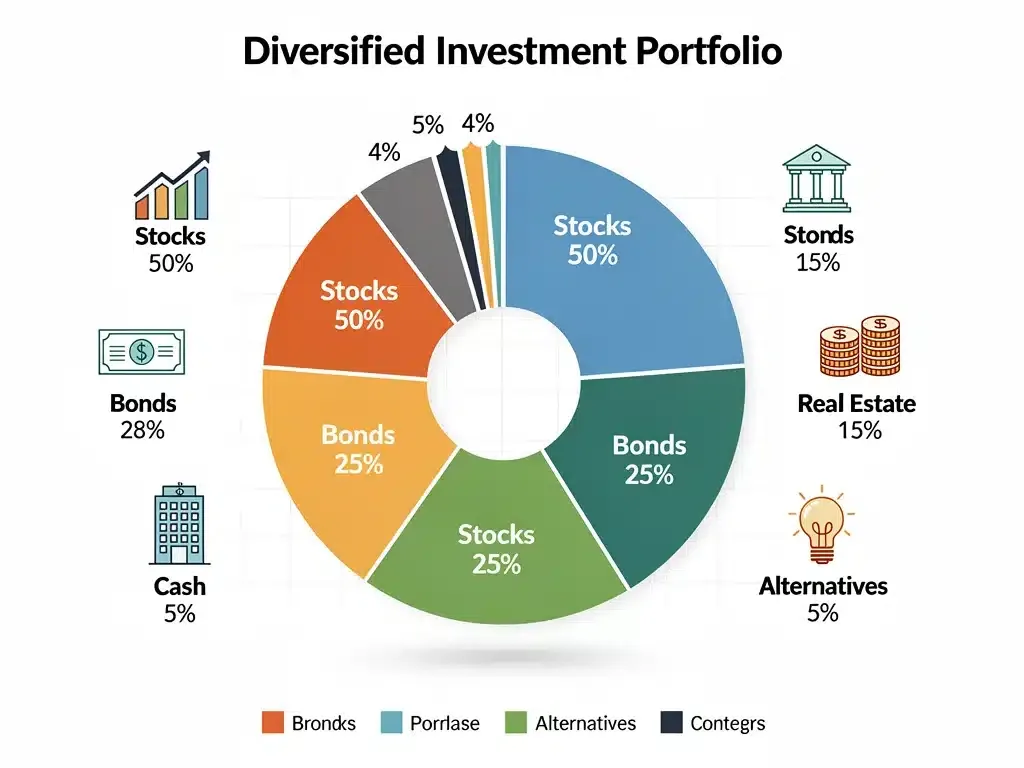
Diversification is not merely a buzzword in investment circles; it is a fundamental principle for mitigating risk and enhancing portfolio stability.
Spreading investments across various asset classes, industries, and geographic regions can cushion against market downturns and optimize returns.
A well-diversified portfolio aims to achieve a balance where the poor performance of one asset class is offset by the stronger performance of another.
This strategic allocation is particularly vital in volatile markets, where concentrated risks can lead to significant losses.
For Smart Investments, understanding the nuances of diversification is the bedrock upon which successful long-term strategies are built. It’s about strategic allocation rather than simply owning many different things.
Why Diversification Matters More Than Ever
- Risk Mitigation: Diversification reduces the impact of any single asset’s poor performance on the overall portfolio.
- Enhanced Returns: By combining assets with different risk-return profiles, investors can potentially achieve higher risk-adjusted returns.
- Capital Preservation: A diversified approach helps protect capital during market corrections and economic uncertainties.
- Adaptability: It allows portfolios to be more resilient and adaptable to changing market conditions and unforeseen events.
The goal is to create a portfolio that can withstand various economic scenarios, ensuring steady growth while minimizing exposure to idiosyncratic risks. This strategic foresight is what defines Smart Investments.
Key Asset Class 1: Equities – Growth and Innovation Drivers
Equities, or stocks, remain a cornerstone of most investment portfolios, offering the potential for significant capital appreciation and dividend income.
For 2026, the equity market is likely to be driven by companies at the forefront of technological innovation and sustainable practices.
Investors should focus on sectors exhibiting strong growth trajectories, such as artificial intelligence, renewable energy, and advanced healthcare.
These industries are poised to benefit from long-term secular trends and substantial investment.
Careful selection of individual stocks, coupled with a strategic allocation to broad market index funds, can provide a balanced approach to equity exposure. This dual strategy is central to making Smart Investments.
Identifying High-Growth Equity Sectors
Artificial intelligence continues its rapid ascent, with applications spanning countless industries from healthcare to finance.
Investing in companies developing AI infrastructure, software, and specialized hardware offers substantial growth potential.
The global push towards decarbonization makes renewable energy a compelling sector. Companies involved in solar, wind, and energy storage technologies are benefiting from government incentives and increasing consumer demand.
Advanced healthcare, including biotechnology and personalized medicine, addresses critical societal needs and is characterized by continuous innovation. Breakthroughs in these areas can lead to significant market opportunities.

Key Asset Class 2: Fixed Income – Stability and Income Generation
Fixed income, primarily bonds, serves as a crucial component for portfolio stability and regular income generation. In an environment of fluctuating interest rates, selecting the right fixed-income instruments becomes paramount.
Government bonds, corporate bonds, and municipal bonds each offer distinct risk and return characteristics. Understanding these differences allows investors to tailor their fixed-income exposure to their specific financial goals and risk tolerance.
For Smart Investments, fixed income plays a vital role in balancing the higher volatility of equities, providing a steady stream of income and preserving capital.
Strategic Approaches to Fixed Income
Short-duration bonds can offer more flexibility in a rising interest rate environment, as their prices are less sensitive to rate changes. This strategy allows investors to reinvest at higher rates sooner.
High-quality corporate bonds from financially stable companies can provide attractive yields with relatively lower default risk. Due diligence on the issuing company’s creditworthiness is essential.
Municipal bonds, particularly those issued by well-rated entities, can offer tax-exempt income, making them particularly appealing to investors in higher tax brackets. Their income stream can be a significant advantage.
Key Asset Class 3: Alternative Investments – Uncorrelated Returns
Alternative investments encompass a broad category that includes real estate, private equity, hedge funds, and commodities.
These assets often exhibit low correlation with traditional asset classes, providing valuable diversification benefits and potential for uncorrelated returns.
Real estate, both direct ownership and REITs (Real Estate Investment Trusts), can offer stable income and long-term capital appreciation, acting as a hedge against inflation.
Private equity provides access to high-growth private companies before they go public.
Commodities, such as gold and other precious metals, can serve as safe havens during economic uncertainty and inflation. Integrating these alternatives is a hallmark of Smart Investments.
Exploring Specific Alternative Assets
Investing in real estate through REITs offers liquidity and diversification within the property market, without the complexities of direct ownership. These publicly traded entities allow investors to gain exposure to various property types.
Private equity funds invest in private companies, often with the aim of restructuring and growing them before an exit. While illiquid, private equity can offer substantial returns for sophisticated investors.
Gold has historically been a store of value and a hedge against inflation and currency devaluation. Including a small allocation to gold can provide a protective element to a diversified portfolio.


Risk Management and Portfolio Rebalancing for 2026
Effective risk management is an ongoing process that involves continually assessing and adjusting your investment portfolio.
Market conditions change, and what was once a prudent allocation may become suboptimal over time. Regular rebalancing ensures your portfolio remains aligned with your risk tolerance and financial objectives.
This entails periodically selling assets that have performed well and buying those that have underperformed, bringing your asset allocation back to its target percentages.
This disciplined approach prevents your portfolio from becoming overly concentrated in certain areas and helps lock in gains.
Implementing robust risk management strategies and consistent rebalancing is crucial for maintaining the integrity and effectiveness of your Smart Investments. It’s a dynamic process, not a one-time event.
Key Principles of Risk Management
- Asset Allocation: Establish and adhere to a target asset allocation that matches your investment goals and risk profile.
- Diversification: Maintain diversification across various asset classes, sectors, and geographies to spread risk.
- Regular Review: Periodically review your portfolio’s performance and make necessary adjustments to stay on track.
- Emotional Discipline: Avoid making impulsive decisions based on market fluctuations; stick to your long-term plan.
Understanding and managing risk is as important as identifying investment opportunities. A well-executed risk management plan is integral to achieving sustainable financial success with Smart Investments.
The Role of Technology in Modern Investment Strategies
Technology has revolutionized the investment landscape, offering unprecedented access to information, analytical tools, and automated trading platforms.
From robo-advisors to advanced algorithmic trading, technological advancements empower investors to make more informed and efficient decisions.
Utilizing financial technology (FinTech) can streamline portfolio management, enhance research capabilities, and provide real-time market insights.
These tools are no longer just for institutional investors; they are accessible to individual investors seeking an edge.
Embracing technology is a critical component of any forward-thinking investment strategy, especially when considering Smart Investments. It allows for greater precision and responsiveness in a fast-paced market.
Leveraging FinTech for Investment Success
Robo-advisors provide automated, algorithm-driven financial planning services with little to no human supervision.
They can help investors with asset allocation, portfolio rebalancing, and even tax-loss harvesting, often at a lower cost than traditional financial advisors.
Investment research platforms offer vast amounts of data, analyst reports, and screening tools to help investors identify potential opportunities and conduct thorough due diligence.
These platforms empower investors with comprehensive information.
Blockchain technology, while still nascent in some investment applications, holds promise for greater transparency and efficiency in areas like real estate transactions and private asset management.
Its potential impact on future investment structures is significant.
Building a Personalized Investment Plan for 2026
Creating a personalized investment plan is essential for achieving your financial aspirations.
This plan should reflect your unique financial situation, risk tolerance, time horizon, and specific investment goals. It serves as a roadmap to guide your decisions and keep you focused.
Begin by clearly defining your short-term and long-term objectives, such as saving for retirement, a down payment on a home, or a child’s education.
Quantifying these goals helps in determining the required rate of return and appropriate risk level.
Consulting with a qualified financial advisor can provide invaluable insights and help tailor a plan that aligns with your individual circumstances.
A personalized approach is fundamental to making Smart Investments truly effective.
Steps to Develop Your Investment Plan
- Assess Your Financial Situation: Evaluate your current income, expenses, savings, and existing investments.
- Define Your Goals: Clearly articulate your short-term and long-term financial objectives with specific timelines.
- Determine Risk Tolerance: Understand how much risk you are comfortable taking, as this will influence your asset allocation.
- Choose Asset Allocation: Decide on the percentage of your portfolio to allocate to different asset classes based on your goals and risk tolerance.
- Regularly Review and Adjust: Periodically review your plan and make adjustments as your life circumstances or market conditions change.
A well-structured investment plan provides the framework for disciplined decision-making, helping you stay on track towards achieving your financial targets. This proactive planning is key to successful Smart Investments.
| Key Investment Area | Strategic Focus for 2026 |
|---|---|
| Equities | Focus on AI, renewable energy, and biotech for growth potential. |
| Fixed Income | Prioritize short-duration bonds and high-quality corporates for stability. |
| Alternatives | Explore REITs, private equity, and commodities for uncorrelated returns. |
| Diversification | Essential for risk mitigation and enhancing overall portfolio resilience. |
Frequently Asked Questions About Smart Investments 2026
What are the primary challenges for investors in 2026?▼Investors in 2026 face challenges including persistent inflation, potential interest rate volatility, and geopolitical uncertainties. Adapting to these dynamic conditions requires a flexible and well-diversified investment strategy to mitigate risks and capitalize on emerging opportunities effectively.
How can alternative investments boost my portfolio?▼Alternative investments like real estate, private equity, and commodities can enhance a portfolio by providing uncorrelated returns. They often perform differently from traditional stocks and bonds, offering valuable diversification benefits and potential for higher risk-adjusted returns, especially in volatile markets.
Is technological innovation a safe investment theme for 2026?▼Technological innovation, particularly in AI and renewable energy, presents significant growth opportunities. While no investment is entirely safe, these sectors are driven by long-term trends and substantial investment. Prudent investors should diversify within these themes to manage specific company risks effectively.
What role does rebalancing play in a 2026 investment strategy?▼Rebalancing is crucial for maintaining your desired asset allocation and risk profile. It involves periodically adjusting your portfolio by selling overperforming assets and buying underperforming ones. This disciplined approach ensures your portfolio remains aligned with your long-term financial goals and risk tolerance.
Should I consult a financial advisor for Smart Investments for 2026: A Guide to Diversifying Your Portfolio with 3 Key Asset Classes (PRACTICAL SOLUTIONS)?▼Consulting a qualified financial advisor is highly recommended, especially for complex investment decisions. An advisor can help you assess your financial situation, define your goals, and create a personalized investment plan tailored to your specific needs and risk tolerance for Smart Investments for 2026: A Guide to Diversifying Your Portfolio with 3 Key Asset Classes (PRACTICAL SOLUTIONS).
Looking Ahead: Adapting to Evolving Markets
The investment landscape for 2026 will undoubtedly continue to evolve, presenting new challenges and opportunities.
Successful investors will be those who remain informed, adaptable, and disciplined in their approach. The principles of diversification, strategic asset allocation, and continuous risk management will serve as steadfast guides.
To explore top-performing asset classes and actionable market strategies, read NerdWallet’s breakdown of the best investments to consider right now.
Monitoring global economic indicators, technological advancements, and geopolitical developments will be essential for making timely adjustments to investment strategies.
The insights gained from a thorough understanding of these dynamics will empower investors to navigate the future with confidence.
Ultimately, the journey of making Smart Investments for 2026: A Guide to Diversifying Your Portfolio with 3 Key Asset Classes (PRACTICAL SOLUTIONS) is an ongoing process of learning and adaptation.
Staying proactive and leveraging expert advice will be key to long-term financial success in an ever-changing world.
For a step-by-step walkthrough on building your portfolio, NerdWallet’s full guide for beginner investors breaks down the fundamental steps to getting started with asset allocation.