Project-Based Learning in 2026: K-12 Implementation Guide
Advertisements

Project-Based Learning (PBL) in 2026 is becoming a core pedagogical model across U.S. K-12 schools, moving classrooms away from traditional lectures and toward student-centered, real-world challenges.
This guide delivers a direct, objective framework for educators, breaking down the essential phases of designing, executing, and assessing rigorous PBL initiatives while highlighting the critical classroom strategies you need to monitor next.
Understanding the Foundations of Project-Based Learning in 2026
Project-Based Learning (PBL) centers on students engaging in an extended process of inquiry in response to a complex question, problem, or challenge.
This method is designed to cultivate deeper learning and essential skills beyond rote memorization. For K-12 educators, embracing PBL means shifting from content delivery to facilitating discovery.
The core philosophy of PBL emphasizes student ownership, authentic tasks, and public presentation of work, moving learning beyond the classroom walls.
In 2026, this approach is more relevant than ever, addressing the need for adaptable and resilient learners. Effective implementation requires a clear understanding of its underlying principles.
PBL is not merely doing projects; it is a systematic instructional method that engages students in learning knowledge and skills through an extended inquiry process.
This process is structured around challenging questions and authentic products or performances. Educators must grasp these foundational elements to successfully implement Project-Based Learning in 2026.
Defining Authentic Projects and Driving Questions
Authentic projects are those that have real-world relevance, mirroring tasks and problems encountered outside of school.
These projects provide a context for learning that resonates with students, increasing engagement and motivation. The driving question is the open-ended inquiry that guides the entire project.
A well-crafted driving question is challenging, open-ended, and connects to core academic content, sparking student curiosity.
It should not be easily answerable with a simple search, but rather require sustained investigation and critical thinking. Crafting these questions is a crucial first step in Project-Based Learning in 2026.
- Projects must directly connect to real-world issues or scenarios.
- Driving questions should be open-ended, requiring deep inquiry.
- Questions should be challenging yet accessible, fostering student curiosity.
- Authenticity enhances student engagement and relevance of learning.
Key Characteristics of Effective PBL
Effective PBL is characterized by several key features, including a challenging problem or question, sustained inquiry, authenticity, student voice and choice, reflection, critique and revision, and a public product.
These elements work together to create a rich learning experience. Understanding these characteristics is vital for K-12 educators.
Sustained inquiry means students delve deeply into a topic over an extended period, rather than superficial exploration.
Student voice and choice empower learners to make decisions about their project, fostering ownership and motivation. These components are essential for successful Project-Based Learning in 2026.
- Challenging problem or question at the core of the project.
- Sustained inquiry allowing for deep exploration of the topic.
- Authenticity connecting learning to real-world contexts.
- Student voice and choice in project direction and execution.
- Opportunities for reflection, critique, and revision of work.
- Creation of a public product or presentation of learning.
Step-by-Step Implementation Guide for K-12 Educators
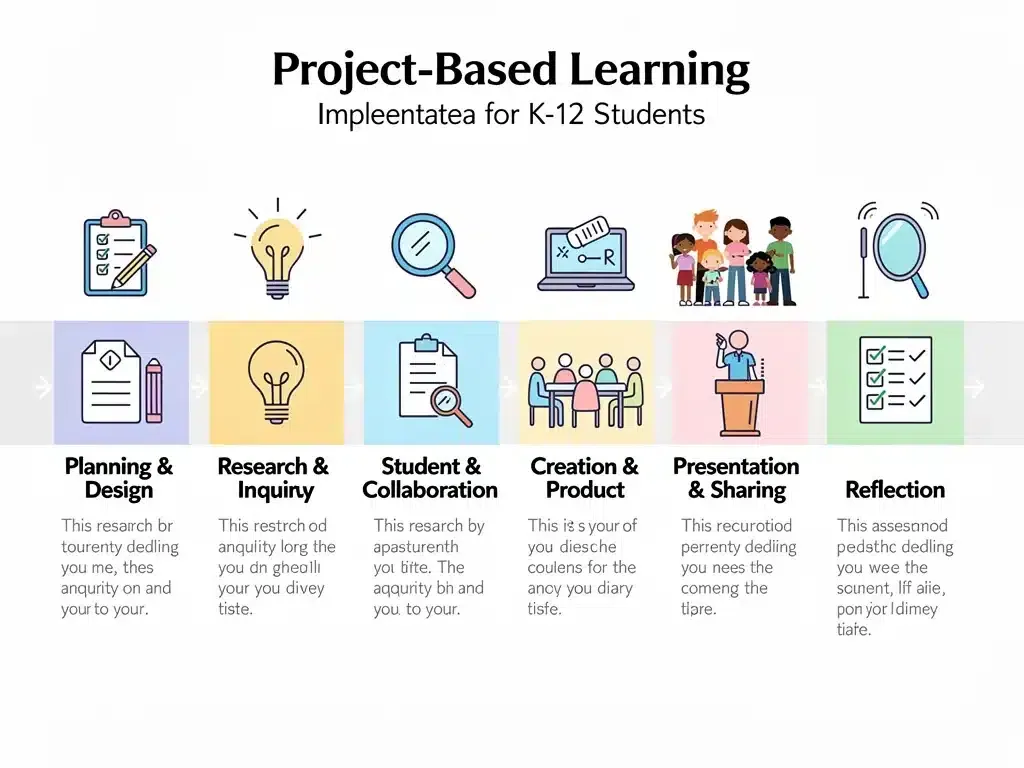
Implementing Project-Based Learning requires a structured approach, moving from initial design to final assessment.
This guide outlines the essential steps for K-12 educators to successfully integrate PBL into their classrooms. Each phase builds upon the last, ensuring a coherent and impactful learning experience.
The process begins with careful planning and culminates in student reflection and public sharing of their work.
Educators must act as facilitators, guiding students through inquiry, collaboration, and critical thinking. This methodical approach is key to achieving the full benefits of Project-Based Learning in 2026.
From establishing clear learning goals to managing resources and assessing outcomes, each step demands thoughtful consideration and preparation.
Following this step-by-step guide will help educators navigate the complexities of PBL implementation. It ensures a robust framework for student success in a Project-Based Learning environment.
Step 1: Design the Project and Driving Question
The initial phase involves clearly defining the project’s learning objectives and crafting a compelling driving question.
Educators should consider what knowledge and skills students need to acquire. This stage sets the foundation for the entire project, ensuring alignment with curriculum standards.
Brainstorming real-world problems or scenarios that resonate with students’ experiences can help generate authentic project ideas.
The driving question should be refined to be open-ended, relevant, and intellectually stimulating. This careful design is paramount for effective Project-Based Learning in 2026.
- Identify clear learning objectives aligned with curriculum standards.
- Brainstorm authentic, real-world problems or challenges.
- Develop an engaging, open-ended driving question.
- Ensure the project offers opportunities for sustained inquiry.
Step 2: Plan Assessment and Scaffolding
Before launching the project, educators must plan how student learning will be assessed and what scaffolding will be provided.
Assessments should be authentic, reflecting the skills and knowledge students are developing throughout the project. This includes formative and summative evaluations.
Scaffolding involves providing students with necessary resources, tools, and support to successfully navigate the project’s challenges.
This might include mini-lessons, graphic organizers, or access to experts. Thoughtful planning here ensures all students can engage meaningfully with Project-Based Learning in 2026.
- Design authentic assessment rubrics and criteria.
- Incorporate both formative and summative assessment strategies.
- Plan for differentiated scaffolding to support diverse learners.
- Identify necessary resources, tools, and expert connections.
Facilitating Student Inquiry and Collaboration
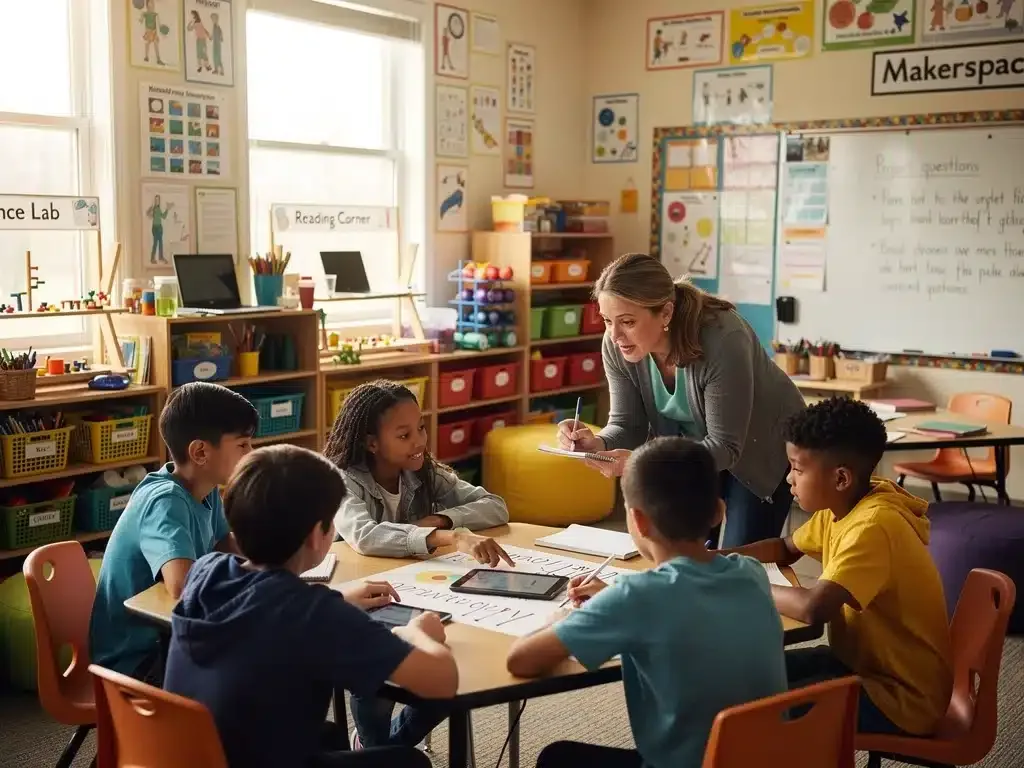
Once the project is designed, the educator’s role shifts to that of a facilitator, guiding students through the inquiry process and fostering collaborative skills.
This involves creating a classroom environment where questions are encouraged, and students feel empowered to explore. Active facilitation is critical for successful Project-Based Learning in 2026.
Encouraging students to take ownership of their learning journey is central to PBL. Educators should provide opportunities for students to work together, share ideas, and constructively critique each other’s work.
Effective collaboration is a cornerstone of this pedagogical approach.
The facilitator also monitors student progress, offers targeted feedback, and helps students overcome obstacles without providing direct answers.
This balance of guidance and independence is essential for developing self-directed learners. It is about empowering students in their Project-Based Learning in 2026 journey.
Guiding the Inquiry Process
Guiding inquiry involves teaching students how to ask effective questions, conduct research, and analyze information from various sources.
Educators can model these skills and provide structures, such as research journals or inquiry logs, to support student investigations. This ensures students develop strong research habits.
It is important to allow students to pursue their own lines of inquiry within the project’s scope, fostering intellectual curiosity and critical thinking.
The educator’s role is to challenge assumptions and push students towards deeper understanding. This active guidance is a hallmark of Project-Based Learning in 2026.
- Teach students how to formulate effective research questions.
- Provide strategies for conducting reliable research and analyzing sources.
- Encourage independent exploration while maintaining project focus.
- Offer tools and structures to organize research and findings.
Fostering Effective Collaboration
Collaboration is a vital 21st-century skill, and PBL provides numerous opportunities for its development.
Educators should explicitly teach collaboration skills, such as active listening, conflict resolution, and equitable task distribution. Creating diverse groups can also enhance learning outcomes.
Establishing clear group roles and norms can help teams function more effectively, ensuring all members contribute meaningfully to the project.
Regular check-ins with groups allow educators to provide feedback on their collaborative processes. This focus on teamwork is integral to Project-Based Learning in 2026.
- Explicitly teach and model collaboration skills.
- Establish clear group roles and expectations for teamwork.
- Provide opportunities for peer feedback and self-assessment on collaboration.
- Monitor group dynamics and intervene as needed to support productive work.
Integrating Technology and Resources in PBL
Leveraging technology and diverse resources is crucial for enriching Project-Based Learning experiences in 2026.
Digital tools can enhance research, collaboration, creation, and presentation, making projects more engaging and realistic. Educators should thoughtfully integrate these elements to amplify learning outcomes.
Access to a wide array of resources, including online databases, community experts, and physical materials, expands the possibilities for student inquiry and project development.
Strategic resource planning ensures students have what they need to succeed. This integration is a key component of modern Project-Based Learning.
From virtual field trips to collaborative online documents, technology bridges geographical gaps and provides immediate access to information.
Thoughtful integration ensures that technology serves as a powerful enabler, not just a distraction, in the context of Project-Based Learning in 2026.
Utilizing Digital Tools for Enhanced Learning
A variety of digital tools can support different phases of a PBL project. Research can be enhanced with academic databases and credible online sources, while collaboration can be facilitated through shared documents and communication platforms.
Presentation tools allow for dynamic and engaging public products.
Consider tools for data visualization, multimedia creation, and project management to help students organize their work and present their findings effectively.
Training students in the responsible and ethical use of digital resources is also paramount. These tools are essential for Project-Based Learning in 2026.
- Integrate online research databases and credible digital sources.
- Utilize collaborative platforms for group work and communication.
- Employ multimedia tools for creating engaging public products.
- Teach digital citizenship and responsible online behavior.
Connecting with Community Resources and Experts
Bringing the outside world into the classroom through community resources and experts adds significant authenticity to PBL projects.
Local businesses, non-profit organizations, and professionals can serve as valuable sources of information, mentorship, or even project partners. These connections enrich the student experience.
Arranging virtual guest speakers, field trips, or mentorship opportunities allows students to gain real-world perspectives and apply their learning in practical contexts.
These partnerships make the project more meaningful and provide students with valuable networking opportunities. This is a core aspect of Project-Based Learning in 2026.
- Identify and connect with local community organizations and experts.
- Arrange virtual or in-person guest speakers, interviews, or field trips.
- Explore mentorship opportunities for students from community professionals.
- Collaborate with external partners to create authentic project challenges.
Assessment and Reflection in Project-Based Learning
Assessment in PBL extends beyond traditional tests, focusing on evaluating the process of inquiry, collaboration, and the quality of the public product.
Reflection is equally vital, allowing students to critically analyze their learning journey and identify areas for growth. Both are integral to the PBL cycle.
Authentic assessment methods, such as rubrics, portfolios, and presentations, provide a holistic view of student learning and skill development.
These methods align closely with the real-world nature of the projects. Educators must design these assessments carefully for Project-Based Learning in 2026.
Regular reflection prompts students to think about their progress, challenges, and new understandings, fostering metacognitive skills.
This iterative process of doing, assessing, and reflecting ensures deep and lasting learning. It is a continuous loop that enhances the educational experience.
Authentic Assessment Strategies
Rubrics are essential for clearly outlining expectations and criteria for project success, allowing students to understand how their work will be evaluated.
Portfolios can showcase a collection of student work, demonstrating growth over time and mastery of various skills. These are powerful tools.
Presentations to an authentic audience provide students with an opportunity to articulate their learning, receive feedback, and build confidence.
Peer and self-assessment also contribute to a comprehensive evaluation of learning. These strategies are key to effective Project-Based Learning in 2026.
- Develop comprehensive rubrics for project products and processes.
- Utilize portfolios to document student progress and learning artifacts.
- Facilitate public presentations with authentic audiences for feedback.
- Incorporate peer and self-assessment opportunities into the project.
Promoting Student Reflection and Growth
Reflection activities, such as journaling, group discussions, and reflective essays, encourage students to think deeply about their learning experiences.
These activities help students connect their project work to broader concepts and personal growth. Reflection is an ongoing process throughout the project.
Providing structured opportunities for critique and revision helps students refine their work based on feedback from peers and the educator.
This iterative process fosters a growth mindset and reinforces the value of continuous improvement. This is a critical element of Project-Based Learning in 2026.
- Integrate regular reflection prompts and activities.
- Encourage students to articulate their learning process and challenges.
- Provide structured opportunities for constructive critique and revision.
- Foster a growth mindset through feedback and iterative improvement.
Addressing Challenges and Ensuring Equity in PBL
While Project-Based Learning offers significant benefits, educators must be prepared to address potential challenges and ensure equitable access and support for all students.
Resource constraints, time management, and varying student needs can impact implementation. Proactive planning is essential.
Ensuring equity means designing projects that are accessible to diverse learners, including those with special needs or from different socioeconomic backgrounds.
Differentiated instruction and varied scaffolding strategies are crucial. Addressing these issues strengthens the impact of Project-Based Learning in 2026.
By anticipating common hurdles and implementing inclusive practices, educators can maximize the positive impact of PBL.
This proactive approach helps create a supportive and engaging learning environment for every student. It is about creating opportunities for all learners to thrive.
Overcoming Common Implementation Hurdles
Time management is a frequent challenge, as PBL projects often require significant instructional time.
Educators can address this by carefully planning schedules, integrating projects across subjects, and front-loading some content. Resource allocation, including materials and technology, also requires careful consideration.
Maintaining student engagement throughout extended projects can also be a hurdle. Regularly checking in, providing varied activities, and connecting learning to student interests can help sustain motivation.
Addressing these practicalities ensures smoother Project-Based Learning in 2026 implementation.
- Develop realistic timelines and integrate PBL across subject areas.
- Secure necessary resources, including materials, technology, and community connections.
- Implement strategies to maintain student engagement over extended periods.
- Provide ongoing professional development for educators in PBL methodologies.
Promoting Equity and Inclusivity in PBL
Designing projects with multiple entry points and varied pathways to success ensures all students can participate meaningfully.
Providing diverse scaffolding options, from visual aids to peer tutoring, supports different learning styles and needs. This inclusive design is fundamental.
Culturally responsive pedagogy in PBL involves selecting project topics that resonate with students’ diverse backgrounds and experiences.
This helps students see themselves reflected in the curriculum, enhancing engagement and relevance. Equity is a cornerstone of effective Project-Based Learning in 2026.
- Design projects with multiple entry points and differentiated tasks.
- Provide diverse scaffolding and support mechanisms for all learners.
- Select culturally responsive project topics that reflect student backgrounds.
- Ensure equal access to technology and resources for all students.
Professional Development and Ongoing Support
Successful implementation of Project-Based Learning in 2026 requires continuous professional development and ongoing support for K-12 educators.
PBL is a shift in pedagogy, and educators need training, mentorship, and opportunities to collaborate with peers. Investing in professional growth is critical.
Workshops focusing on project design, assessment strategies, and facilitation techniques can equip educators with the necessary skills.
Peer learning communities and mentorship programs provide valuable platforms for sharing best practices and troubleshooting challenges. Support systems are paramount.
Schools and districts must commit to providing sustained professional learning opportunities to ensure educators feel confident and competent in implementing PBL.
This commitment fosters a culture of innovation and continuous improvement. It is an investment in the future of education.
Essential Professional Development Areas
Training should cover the entire PBL cycle, from crafting driving questions to designing authentic assessments.
Specific focus areas include integrating technology, managing group dynamics, and providing effective feedback. These skills are foundational for Project-Based Learning in 2026.
Professional development should also address differentiated instruction within PBL, ensuring educators can support all learners effectively.
Exposure to exemplary PBL projects and opportunities to design and pilot their own projects are highly beneficial. Practical experience solidifies theoretical knowledge.
- Project design and development, including crafting driving questions.
- Authentic assessment strategies and rubric creation.
- Facilitation techniques for student inquiry and collaboration.
- Integration of technology and community resources.
Building a Supportive PBL Community
Creating a school-wide or district-wide community of PBL practitioners fosters shared learning and support.
Regular meetings, online forums, and coaching cycles can help educators connect, share insights, and collaboratively solve problems. A strong community reduces feelings of isolation.
Peer observations and co-teaching opportunities allow educators to learn from each other’s experiences and refine their PBL practices.
Leadership support, including dedicated time and resources for PBL, signals its importance and encourages adoption. This collective effort is vital for Project-Based Learning in 2026.
- Establish professional learning communities for PBL educators.
- Implement mentorship programs connecting experienced and novice PBL teachers.
- Provide dedicated time and resources for collaborative planning and reflection.
- Ensure administrative support and leadership buy-in for PBL initiatives.
| Key Point | Brief Description |
|---|---|
| Project Design | Craft engaging driving questions and align with learning objectives. |
| Facilitation Role | Guide student inquiry, collaboration, and critical thinking. |
| Assessment & Reflection | Utilize authentic assessments and promote metacognitive reflection. |
| Equity & Support | Address challenges, ensure inclusivity, and provide ongoing professional development. |
Frequently Asked Questions About Implementing Project-Based Learning
What is the primary goal of Project-Based Learning in 2026?▼The primary goal is to foster deep learning, critical thinking, problem-solving, and collaboration skills through engaging, real-world projects. It prepares K-12 students for future challenges by making learning relevant and student-centered, moving beyond traditional memorization.
How can educators ensure projects are authentic?▼Authenticity is achieved by connecting projects to real-world issues, community problems, or professional tasks. Involving community experts and designing projects that result in public products or solutions for genuine needs enhances relevance and student ownership.
What role does technology play in Project-Based Learning?▼Technology enhances PBL by providing tools for research, collaboration, creation, and presentation. Digital platforms facilitate communication, access to information, and multimedia production, making projects more dynamic and preparing students for a tech-driven world.
How are students assessed in a PBL environment?▼Assessment in PBL is comprehensive, utilizing authentic methods like rubrics, portfolios, and presentations. It evaluates not only the final product but also the inquiry process, collaboration skills, and critical thinking demonstrated throughout the project’s duration.
What are the main challenges for implementing PBL in K-12?▼Key challenges include time management, securing adequate resources, maintaining student engagement, and ensuring equitable access for all learners. Ongoing professional development and strong administrative support are crucial to overcome these common hurdles effectively.
Looking Ahead: The Future of Project-Based Learning in K-12
The ongoing integration of Project-Based Learning in 2026: A Step-by-Step Implementation Guide for K-12 Educators signals a significant shift in educational paradigms.
As schools and districts continue to refine their approaches, the emphasis will remain on fostering student agency and real-world applicability.
Future developments will likely see even greater integration of AI and personalized learning pathways within PBL frameworks, further tailoring experiences to individual student needs.
This evolution promises to make learning even more dynamic and relevant for all K-12 students across the United States. Educators must stay informed.
To build a sustainable foundation for these classrooms, schools must move past short-term, superficial activities and instead focus on rigorous, standards-focused core criteria—such as sustained inquiry and public product presentation.
For an authoritative framework on these structural elements and how to differentiate authentic experiences from traditional classroom projects, you can explore the core criteria for what is project-based learning from PBLWorks.
Monitoring best practices, engaging in continuous professional development, and sharing successful strategies will be paramount for educators.
The goal is to ensure Project-Based Learning remains a powerful tool for preparing students for an ever-changing world, equipping them with essential skills for success beyond the classroom.