Agriculture Bill 2026: Key Provisions Impacting Farmers and Food Prices
Advertisements
The Agriculture Bill 2026 introduces critical policy updates that directly affect farm subsidies, supply chains, and retail grocery costs across the United States.
This brief news update covers key legislative shifts, why these changes matter for consumers and producers, and what policy milestones readers should monitor next.
Understanding the Agriculture Bill 2026 Framework
The Agriculture Bill represents a significant legislative effort to modernize and stabilize the agricultural sector in the United States.
This comprehensive bill aims to address long-standing challenges while also preparing farming communities for future demands.
Its framework is built upon pillars of sustainability, economic resilience, and consumer protection.
Early discussions surrounding the Agriculture Bill have highlighted its ambitious scope, touching upon various aspects from land use to food distribution.
Stakeholders, including farmers, environmental groups, and food industry representatives, are closely analyzing its potential ramifications. The bill seeks to create a more equitable and efficient system for all involved.
As the legislative process unfolds, understanding the core tenets of the Agriculture Bill becomes paramount.
It outlines new subsidies, regulatory changes, and investment opportunities designed to foster innovation and ensure food security. These foundational elements will dictate the direction of American agriculture for years to come.
Key Provisions for Farmers and Rural Communities
The Agriculture Bill introduces several critical measures specifically designed to support farmers and invigorate rural economies.
These provisions range from direct financial aid to programs promoting technological adoption, aiming to enhance productivity and reduce operational costs. The goal is to provide a robust safety net while encouraging sustainable practices.
Among the most discussed aspects are the revamped subsidy structures, which seek to move away from traditional models towards performance-based incentives.
Farmers who adopt environmentally friendly techniques or invest in renewable energy solutions may find themselves eligible for new funding streams. This shift is intended to align agricultural practices with broader national sustainability goals.
Enhanced Support Programs
- Expanded access to low-interest loans for farm modernization and expansion.
- New grant programs for integrating precision agriculture technologies.
- Increased funding for mental health services within rural communities.
Additionally, the Agriculture Bill includes provisions for improved crop insurance options and disaster relief, offering greater financial security against unpredictable weather events and market fluctuations.
These measures are crucial for maintaining stability in an inherently volatile industry. The bill also emphasizes educational initiatives, providing resources for farmers to learn about new techniques and market trends.
Impact on Consumer Food Prices
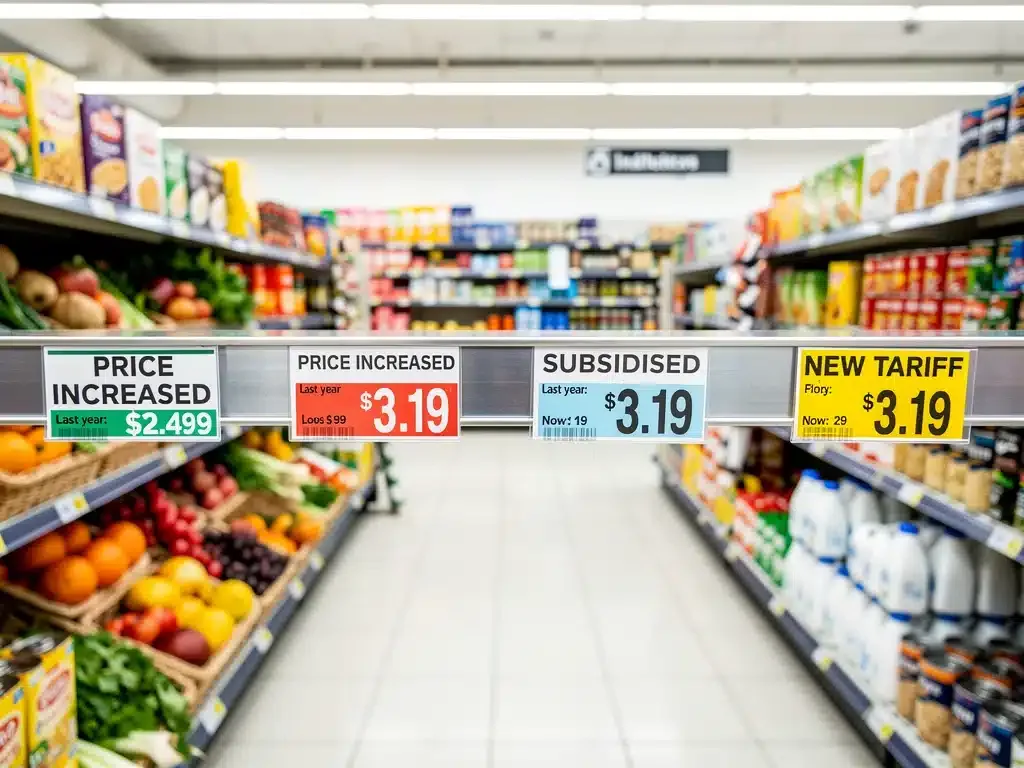
One of the most immediate concerns for the general public regarding the Agriculture Bill is its potential influence on the cost of groceries.
Economic analyses suggest a complex interplay of factors that could either stabilize or increase food prices, depending on the implementation and market responses.
The bill’s provisions are designed to balance farmer profitability with consumer affordability.
The legislation includes measures aimed at streamlining supply chains and reducing waste, which could theoretically lead to lower production costs and, subsequently, more stable or even decreased food prices.
However, investments in sustainable farming practices and compliance with new regulations might initially add to operational expenses for some producers. These costs could, in turn, be partially passed on to consumers.
Supply Chain Optimization
- Funding for infrastructure improvements to reduce transportation costs.
- Incentives for local food systems to shorten distribution networks.
- Regulations to minimize food waste at various stages of production and distribution.
Furthermore, the Agriculture Bill seeks to promote competition within the food industry, potentially preventing monopolies that could artificially inflate prices.
Transparency in pricing and clearer labeling requirements are also part of the bill, empowering consumers with more information to make informed purchasing decisions.
Analysts project that while initial adjustments may occur, the long-term goal is a more predictable and fair pricing structure.
Environmental Stewardship and Sustainability Goals
A cornerstone of the Agriculture Bill is its strong emphasis on environmental stewardship and sustainable agricultural practices.
The bill allocates substantial resources towards programs that encourage conservation, biodiversity, and climate change mitigation within the farming sector. This reflects a growing national commitment to ecological responsibility.
New mandates and incentives are introduced to support farmers in adopting practices such as reduced tillage, cover cropping, and efficient water management.
These initiatives are designed not only to protect natural resources but also to improve soil health and enhance the long-term productivity of agricultural lands.
The legislation recognizes the vital link between environmental health and agricultural viability.
Conservation Initiatives
- Increased funding for the Conservation Reserve Program (CRP) and similar initiatives.
- Grants for farmers implementing agroforestry and regenerative agriculture.
- Support for research into climate-resilient crop varieties.
The Agriculture Bill also includes provisions for monitoring and reporting environmental impacts, ensuring accountability and progress towards established sustainability targets.
This holistic approach aims to transform agriculture into a sector that actively contributes to environmental recovery while continuing to feed the nation.
The bill acknowledges that sustainable farming is not just an environmental imperative but also an economic necessity for future generations of farmers.
Technological Advancement and Innovation in Agriculture
The Agriculture Bill heavily invests in fostering technological advancement and innovation across the agricultural landscape.
Recognizing that modern farming relies increasingly on cutting-edge solutions, the bill allocates significant funding for research, development, and the adoption of new technologies.
This push for innovation is expected to revolutionize how food is produced and distributed.
Provisions within the bill support the integration of artificial intelligence, robotics, and advanced data analytics into farming operations.
These technologies promise to optimize resource use, improve crop yields, and enhance decision-making for farmers.
The emphasis is on making these tools accessible to a wider range of agricultural enterprises, from small family farms to large-scale operations.

Funding for Agri-Tech Development
- Grants for startups developing innovative agricultural hardware and software.
- Subsidies for farmers purchasing and implementing precision farming equipment.
- Partnerships between agricultural universities and technology companies for research.
Furthermore, the Agriculture Bill establishes new frameworks for data sharing and cybersecurity in agriculture, ensuring that technological advancements are secure and beneficial for all users.
The bill also addresses the need for a skilled workforce capable of operating and maintaining these new systems, proposing educational and training programs.
This forward-looking approach positions American agriculture at the forefront of global technological innovation.
Trade Implications and Global Market Position
The Agriculture Bill is not solely focused on domestic policies but also carries significant implications for the United States’ position in global agricultural markets.
Provisions within the bill aim to strengthen export capabilities, address trade barriers, and ensure American agricultural products remain competitive internationally.
This global perspective is crucial for the economic health of the sector.
The legislation includes measures to support market access for U.S. agricultural exports, potentially through new trade agreements or by challenging unfair trade practices.
It also provides resources for farmers to meet international standards and certifications, opening up new opportunities in discerning global markets. The goal is to expand the reach and profitability of American agricultural goods.
International Trade Support
- Funding for export promotion programs and trade missions.
- Technical assistance for farmers navigating international trade regulations.
- Diplomatic efforts to reduce tariffs and non-tariff barriers on agricultural products.
Moreover, the Agriculture Bill seeks to protect domestic markets from unfair competition, ensuring a level playing field for American producers.
This balance between promoting exports and safeguarding domestic interests is a delicate but vital aspect of the bill.
The overall strategy is to enhance the resilience and influence of U.S. agriculture on the world stage, thereby indirectly impacting local food prices through global supply and demand dynamics.
Food Security and Nutrition Programs
Ensuring food security and enhancing nutrition programs are central tenets of the Agriculture Bill.
The legislation includes significant allocations for initiatives that aim to combat food insecurity, improve access to healthy foods, and support vulnerable populations across the country.
These provisions reflect a commitment to the well-being of all citizens.
The bill proposes reforms and increased funding for programs such as SNAP (Supplemental Nutrition Assistance Program) and WIC (Special Supplemental Nutrition Program for Women, Infants, and Children), making them more efficient and accessible.
Additionally, there are provisions to support community-based food initiatives, including food banks and farmers’ markets that accept nutrition assistance benefits. This aims to create a more robust and equitable food system.
Nutrition Program Enhancements
- Increased benefit levels for SNAP recipients to meet rising food costs.
- Expanded eligibility criteria for WIC to reach more families in need.
- Grants for school meal programs to offer healthier and locally sourced options.
The Agriculture Bill also focuses on educating the public about healthy eating habits and promoting the consumption of fresh, nutritious produce.
By linking agricultural production with public health outcomes, the bill seeks to create a virtuous cycle where sustainable farming supports a healthier populace.
This integrated approach highlights the interconnectedness of agriculture, economy, and public welfare.
Challenges and Future Outlook
While the Agriculture Bill presents numerous opportunities, it is not without its challenges. Implementation complexities, potential budgetary constraints, and the need for broad stakeholder cooperation are significant hurdles that must be navigated.
The success of the bill will largely depend on effective execution and adaptability to unforeseen circumstances.
One of the primary challenges lies in ensuring equitable distribution of benefits, particularly for small and historically underserved farmers.
Critics have raised concerns about whether the new subsidy structures will truly level the playing field or inadvertently favor larger agricultural enterprises.
Continuous monitoring and evaluation will be essential to address these disparities.
Potential Obstacles
- Securing bipartisan support for long-term funding commitments.
- Adapting existing bureaucratic structures to new program requirements.
- Managing unforeseen market reactions and global economic shifts.
Looking ahead, the Agriculture Bill aims to build a more resilient and sustainable agricultural future for the United States.
Its long-term success will be measured by its ability to foster economic prosperity for farmers, ensure affordable and nutritious food for consumers, and protect the environment for generations to come.
The ongoing dialogue and collaboration among all parties will be crucial in shaping the final outcomes and ensuring the bill achieves its ambitious objectives.
| Key Provision | Brief Description |
|---|---|
| Farmer Subsidies | Shifts towards performance-based incentives for sustainable practices. |
| Food Price Regulation | Measures to stabilize consumer food costs through supply chain efficiency. |
| Environmental Programs | Increased funding for conservation and climate-friendly farming methods. |
| Technological Innovation | Investment in agri-tech, robotics, and data analytics for farming. |
Frequently Asked Questions About the Agriculture Bill 2026
What is the primary goal of the Agriculture Bill 2026?▼The primary goal of the Agriculture Bill 2026: Key Provisions Impacting Farmers and Food Prices is to modernize the U.S. agricultural sector, ensuring food security, promoting sustainable farming practices, and enhancing the economic viability of farmers and rural communities. It addresses environmental concerns while aiming for market stability.
How will the Agriculture Bill 2026 affect food prices for consumers?▼The Agriculture Bill 2026: Key Provisions Impacting Farmers and Food Prices includes measures to streamline supply chains and reduce waste, which could help stabilize or potentially lower food prices. However, initial investments in sustainable practices might lead to some cost adjustments. The long-term aim is greater affordability.
What kind of support will farmers receive under this new bill?▼Farmers will receive enhanced support through revamped subsidies, expanded access to loans, and grants for adopting new technologies and sustainable practices. The Agriculture Bill 2026: Key Provisions Impacting Farmers and Food Prices also aims to improve crop insurance and disaster relief mechanisms.
Does the Agriculture Bill 2026 address environmental concerns?▼Yes, environmental stewardship is a core component. The Agriculture Bill 2026: Key Provisions Impacting Farmers and Food Prices significantly funds conservation programs, encourages eco-friendly farming, and supports research into climate-resilient agriculture. It aims to improve soil health and protect natural resources.
What are the international trade implications of the bill?▼The Agriculture Bill 2026: Key Provisions Impacting Farmers and Food Prices seeks to strengthen U.S. agricultural exports by addressing trade barriers and promoting market access. It aims to enhance the competitiveness of American products globally, impacting the nation’s overall trade balance and agricultural influence.
Looking Ahead: The Future of Agriculture
The Agriculture Bill 2026: Key Provisions Impacting Farmers and Food Prices sets a new trajectory for the nation’s agricultural sector, emphasizing resilience, innovation, and sustainability.
Its comprehensive approach aims to create a more stable and prosperous future for farmers while ensuring consumers have access to affordable and nutritious food.
The success of this legislation will hinge on its effective implementation and the continued collaboration of all stakeholders.
To stay updated on official program guidance, risk management updates, and legislative implementation details, visit the USDA Farm Bill Information Hub.
As the provisions roll out, their true impact will become clearer, shaping both local economies and global trade dynamics.
Continuous monitoring and evaluation will be crucial to adapt to emerging challenges and opportunities in the agricultural landscape.
The Agriculture Bill 2026: Key Provisions Impacting Farmers and Food Prices is more than just legislation; it is a blueprint for the future of American food production.