Adult Literacy Programs 2026: Free Resources & Support
Advertisements

Adult literacy programs across the United States are evolving rapidly to meet modern economic and digital demands.
This report delivers a direct, clear overview of the current adult education ecosystem, highlighting the free local resources, governmental initiatives, and digital support tools available to learners.
We break down how these accessible pathways operate and outline the key factors to monitor for community-driven educational advancement.
The Evolving Landscape of Adult Literacy Programs in 2026
The demand for robust adult literacy programs continues to grow, driven by shifts in the job market and the increasing complexity of daily life.
In 2026, these programs are not just about basic reading and writing; they encompass digital literacy, financial literacy, and even health literacy.
Government initiatives and private sector partnerships are increasingly recognizing the foundational role of literacy in overall societal health.
This expanded focus ensures that programs are more comprehensive and responsive to the multifaceted needs of adult learners. The goal is to equip individuals with skills for thriving in a modern world.
Organizations are adapting their methodologies to reach diverse populations, including immigrants, individuals with disabilities, and those in remote areas.
The emphasis is on flexible, learner-centered approaches that accommodate varying schedules and learning styles. Accessibility remains a cornerstone of effective program design.
Understanding the Need for Adult Literacy
Millions of adults in the U.S. struggle with low literacy levels, which can severely limit their access to employment, healthcare, and civic participation.
These challenges often perpetuate cycles of poverty and disadvantage, affecting entire families and communities.
Addressing these literacy gaps is not merely an educational endeavor but a societal imperative. Improved literacy rates lead to better public health outcomes, increased economic productivity, and more engaged citizens.
It is an investment with far-reaching positive impacts.
- Approximately 43 million adults in the U.S. have low literacy skills.
- Low literacy costs the U.S. economy billions annually in lost productivity and healthcare costs.
- Improved literacy correlates directly with higher earning potential and reduced unemployment rates.
Key Trends Shaping Adult Literacy in 2026
Technology integration is a significant trend, with many programs incorporating online learning platforms and digital tools.
This allows for greater flexibility and reaches learners who might not otherwise access traditional classroom settings.
Another emerging trend is the focus on integrated education and training (IET) models.
These programs combine literacy instruction with vocational training, enabling learners to acquire both academic and job-specific skills simultaneously. This approach accelerates career readiness.
Furthermore, there’s a growing emphasis on culturally responsive teaching.
Programs are increasingly tailoring materials and instructional methods to reflect the diverse linguistic and cultural backgrounds of their learners. This fosters a more inclusive and effective learning environment.
Accessing Free Adult Literacy Programs: Where to Look
Finding free adult literacy programs can seem daunting, but numerous avenues exist for individuals seeking support. Local libraries, community colleges, and non-profit organizations serve as primary hubs for these essential services.
Many state and federal grants support these programs, ensuring they remain accessible at no cost to the learner.
Understanding the landscape of available funding and the institutions that benefit from it is key to locating appropriate resources. Information is often readily available through local government websites.
Online directories and referral services also play a crucial role in connecting individuals with suitable programs.
These platforms often allow users to search by zip code or specific learning needs, simplifying the process of finding local support. Navigating these tools efficiently can save considerable time and effort.
Public Libraries: Cornerstones of Community Learning
Public libraries across the nation are invaluable resources for adult literacy. Many offer free one-on-one tutoring, small group classes, and access to educational materials, including books, software, and online courses.
These institutions often host volunteer-led programs, providing a supportive and non-judgmental environment for learners of all levels.
Librarians are typically well-versed in local resources and can guide individuals to additional assistance. They are truly community pillars.
- Free tutoring services by trained volunteers.
- Access to computer labs and internet for digital literacy.
- ESL (English as a Second Language) classes and conversation groups.
Community Colleges and Adult Education Centers
Community colleges often provide adult basic education (ABE) and GED preparation courses at little to no cost.
These programs are designed to help adults earn their high school equivalency or improve fundamental academic skills.
Many adult education centers, sometimes affiliated with public school districts, also offer similar services, including literacy instruction and vocational training.
These centers are specifically designed to cater to the needs of adult learners. They provide structured learning pathways.
Funding for these programs often comes from state and federal sources, making them highly accessible.
Prospective students should inquire about tuition waivers, scholarships, or grants that can cover any associated fees. Financial barriers should not deter anyone from seeking education.

Support Networks and Volunteer Opportunities
Beyond formal educational institutions, a robust network of non-profit organizations and volunteer groups dedicates itself to adult literacy.
These groups often fill critical gaps, providing personalized attention and flexible support that complements larger programs.
Volunteers are the backbone of many adult literacy initiatives, offering their time and expertise to tutor, mentor, and guide learners.
Their commitment creates a supportive and encouraging environment, fostering confidence and progress among participants. These individuals make a profound difference.
For those looking to contribute, numerous opportunities exist to get involved, from direct tutoring to administrative support or fundraising.
Engaging with these networks not only helps learners but also enriches the volunteers themselves through meaningful community service. It’s a win-win scenario.
Non-Profit Organizations Leading the Way
Organizations like ProLiteracy, Literacy Volunteers of America, and local literacy councils are at the forefront of providing free adult literacy programs.
They develop curricula, train volunteers, and advocate for increased funding and awareness.
These non-profits often collaborate with libraries, schools, and businesses to extend their reach and impact.
Their comprehensive services include basic literacy, ESL, family literacy, and workforce development programs. They are essential drivers of educational equity.
Many offer online resources, workshops, and peer support groups, creating a holistic learning environment.
Their dedication ensures that even the most underserved populations have access to vital educational opportunities. Their work is truly transformative.
The Role of Volunteers in Adult Literacy Programs 2026
Volunteers provide crucial one-on-one or small-group instruction, tailoring lessons to individual learner needs and paces.
This personalized approach is often more effective than large classroom settings for adults with significant literacy challenges.
Training and ongoing support are typically provided to volunteers, ensuring they are well-equipped to teach effectively.
Many programs require a commitment of just a few hours a week, making it accessible for individuals with busy schedules. It is a flexible way to contribute.
- No prior teaching experience is usually required; training is provided.
- Volunteers gain valuable experience and connect with their community.
- Flexible scheduling options to accommodate various lifestyles.
Digital Literacy and Workforce Development in 2026
In today’s economy, literacy extends far beyond traditional reading and writing. Digital literacy has become a non-negotiable skill for employment, financial management, and navigating essential services.
Adult literacy programs in 2026 increasingly integrate these vital components.
Many programs now offer instruction on basic computer skills, internet usage, email communication, and online safety.
This focus ensures that learners are not only able to read but also to interact effectively with the digital world. It’s about empowering them for modern life.
Workforce development is another key area, with literacy programs often partnering with employers and career centers.
These collaborations help learners acquire the communication and computational skills necessary for job retention and advancement. The aim is holistic skill development.
Integrating Digital Skills into Literacy Education
Learning how to use a computer, navigate the internet, and utilize common software applications is now fundamental.
Programs teach learners how to apply for jobs online, manage personal finances, and access government services digitally. These are practical, everyday skills.
Understanding online privacy and cybersecurity is also a critical component. Learners are taught how to identify scams, protect their personal information, and engage safely in online environments.
This protects them from digital vulnerabilities.
Many programs provide access to computers and internet connectivity, bridging the digital divide for those who lack these resources at home. This ensures equitable access to essential digital learning tools. It levels the playing field for many.
Literacy for Career Advancement and Economic Stability
Enhanced literacy skills directly translate into better employment opportunities and higher wages.
Individuals who improve their reading and writing are better able to complete job applications, write professional communications, and understand workplace instructions. This leads to greater career mobility.
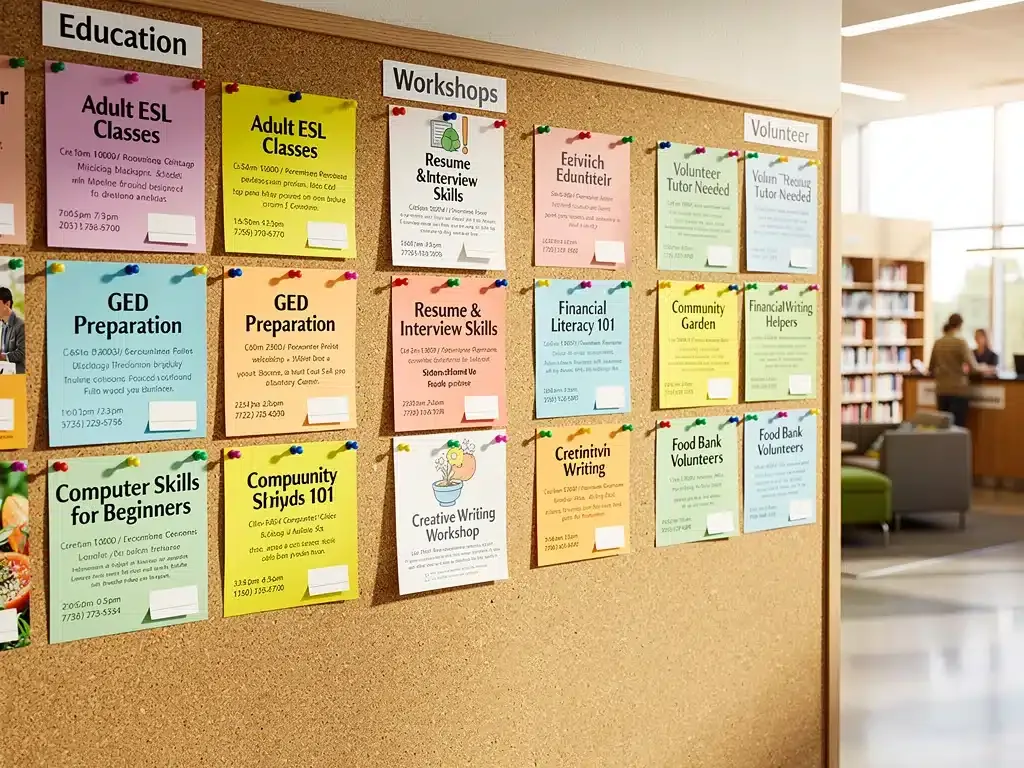
Programs often include resume writing, interview preparation, and workplace communication workshops.
These tailored components prepare learners not just for a job, but for a sustainable career path. The focus is on long-term economic stability.
By partnering with local businesses and vocational training centers, adult literacy programs help match skilled learners with relevant job openings.
This creates a direct pipeline from education to employment, benefiting both individuals and the local economy. It’s a strategic approach to poverty reduction.
Government Support and Policy Initiatives
Federal and state governments play a significant role in funding and shaping adult literacy programs.
Policies such as the Workforce Innovation and Opportunity Act (WIOA) provide critical financial support and strategic direction for adult education services across the nation.
These legislative frameworks ensure that resources are allocated to programs that demonstrate effectiveness and reach underserved populations.
They also promote collaboration between various agencies and educational providers. This creates a unified approach to literacy development.
Ongoing policy discussions aim to further strengthen these programs, addressing emerging needs and expanding access to high-quality instruction.
Advocacy groups continuously work with lawmakers to ensure adult literacy remains a national priority. Their efforts are vital for sustained progress.
Federal Funding and WIOA’s Impact
The Workforce Innovation and Opportunity Act (WIOA) is the primary federal legislation supporting adult education and literacy programs.
It provides funding to states for adult basic education, English language acquisition, and integrated education and training services.
WIOA emphasizes a sector-based approach, aligning adult education with in-demand industries to prepare learners for specific jobs.
This ensures that literacy training is directly relevant to labor market needs. It bridges the gap between education and employment.
- WIOA funds support hundreds of adult literacy programs nationwide.
- It promotes integrated services, combining education with workforce training.
- Regular evaluations ensure funded programs meet performance accountability measures.
State and Local Government Contributions
Many states supplement federal funding with their own appropriations for adult literacy initiatives.
These state-level investments often target specific local needs, such as addressing high illiteracy rates in certain counties or supporting particular demographic groups.
Local governments, through school boards and community development agencies, also contribute by providing facilities, administrative support, and localized outreach efforts.
Their proximity to the community ensures programs are tailored to local contexts. This localized approach is highly effective.
These combined governmental efforts create a robust infrastructure for adult literacy programs, making it possible for millions to access free educational services.
Continuous monitoring and evaluation ensure these funds are utilized effectively. Transparency is key to public trust.
Challenges and Future Outlook for Adult Literacy Programs
Despite significant progress, adult literacy programs face ongoing challenges, including securing consistent funding, recruiting and retaining qualified instructors, and overcoming the stigma associated with adult learning.
Addressing these requires concerted effort from all stakeholders.
Outreach remains a hurdle, as many adults who need literacy support are unaware of available resources or are hesitant to seek help. Innovative communication strategies are essential to reach these individuals effectively.
Confidentiality and trust are paramount.
Looking ahead, the future of adult literacy involves continued adaptation to technological advancements, a greater emphasis on personalized learning paths, and stronger partnerships across sectors.
The goal is to build a more literate and equitable society. This is an ongoing commitment.
Overcoming Barriers to Participation
One significant barrier is the lack of awareness about free adult literacy programs. Many adults are simply unaware that such resources exist or do not know where to begin their search. Targeted marketing and community outreach are crucial.
Transportation, childcare, and conflicting work schedules also pose practical challenges for adult learners.
Programs are increasingly offering flexible scheduling, remote learning options, and even on-site childcare to mitigate these issues. Accessibility must be holistic.
The stigma associated with seeking literacy help can be a powerful deterrent. Creating welcoming, confidential, and supportive environments is essential to encourage participation.
Emphasizing the benefits and celebrating progress can help overcome this. It requires sensitivity and understanding.
The Path Forward: Innovation and Collaboration
Future adult literacy programs will likely leverage artificial intelligence and adaptive learning technologies to personalize instruction and provide immediate feedback.
This can greatly enhance learning efficiency and engagement for diverse learners.
Increased collaboration between educational institutions, businesses, government agencies, and community organizations will be vital.
These partnerships can pool resources, share expertise, and create more comprehensive support systems. Synergy is the key to greater impact.
Advocacy for sustained funding and public awareness campaigns will continue to be critical to ensure that adult literacy remains a national priority.
Investing in adult literacy is an investment in the future prosperity and well-being of the entire nation. It’s a collective responsibility.
| Key Point | Brief Description |
|---|---|
| Program Evolution | Adult literacy extends beyond basic reading to include digital and financial skills. |
| Access Points | Libraries, community colleges, and non-profits offer free, accessible services. |
| Support Networks | Volunteers and non-profits provide crucial personalized instruction and guidance. |
| Future Focus | Integration of technology, workforce development, and sustained funding are key. |
Frequently Asked Questions About Adult Literacy Programs in 2026
What types of free adult literacy programs are available in 2026?▼In 2026, free adult literacy programs encompass basic reading and writing, English as a Second Language (ESL), digital literacy, and GED preparation. These are typically offered through public libraries, community colleges, and non-profit organizations. Many programs also integrate workforce development skills to enhance employability.
How can I find a local adult literacy program in my community?▼To find local adult literacy programs, start by contacting your local public library or community college. Many non-profit organizations like ProLiteracy also have local affiliates. Online search engines and directories, often maintained by state education departments, can also provide comprehensive lists of nearby resources and contact information.
Are there online options for adult literacy education?▼Yes, many adult literacy programs in 2026 offer online learning options to provide flexibility and reach a wider audience. These can include self-paced modules, virtual tutoring sessions, and online classes. Check with local providers or national literacy organizations for their available digital resources and platforms.
What support is available for adult learners with disabilities?▼Adult literacy programs are increasingly equipped to support learners with disabilities. This includes providing assistive technologies, modified learning materials, and individualized instruction plans. It’s recommended to communicate specific needs when enrolling to ensure appropriate accommodations are made available. Many programs prioritize inclusive learning environments.
Can I volunteer to help with adult literacy programs?▼Absolutely. Volunteers are vital to the success of adult literacy programs. Most organizations offer training for tutors and other support roles, requiring no prior teaching experience. Contact your local library, community college, or literacy non-profit to inquire about volunteer opportunities and how you can contribute to this important cause.
Looking Ahead
The landscape of Adult Literacy Programs in 2026 is dynamic, emphasizing accessibility, technological integration, and comprehensive skill development.
Continued collaboration among governmental bodies, non-profits, and communities will be essential to address persistent challenges and expand outreach.
Achieving meaningful scale requires deep infrastructure support, including localized training materials, digital tools, and certified instructor networks that empower grassroots educational movements.
Supporting these structural frameworks is vital to transforming community education.
To learn more about how global advocacy networks build and deploy resources for adult education, or to find local initiatives near you, you can explore the mission and resource options provided by ProLiteracy Adult Literacy Programs.
Monitoring policy changes and local initiatives will provide crucial insights into how these vital programs evolve and impact individuals across the nation, fostering a more educated and empowered populace.