The 2026 Digital Divide in Education: 6 Strategies for Equitable Access
Advertisements

The digital divide continues to threaten educational equity, affecting millions of students who lack reliable internet, devices, and digital literacy.
Bridging this gap requires more than basic access—it demands strategic policy, infrastructure investment, and community support.
As 2026 approaches, these six key strategies outline how policymakers, educators, and leaders can ensure every student has the tools needed to thrive in a digital world.
Understanding the Persistent Digital Divide
The digital divide in education remains a complex issue, characterized by disparities in internet access, device availability, and digital literacy skills.
While significant progress has been made in recent years, the COVID-19 pandemic starkly highlighted the ongoing challenges, revealing how many students still lack essential digital resources for effective learning.
This persistent gap disproportionately affects low-income families, rural communities, and minority groups, creating a two-tiered educational system.
Students without adequate home internet or devices struggle to participate in online learning, access digital resources, and develop critical 21st-century skills, exacerbating existing educational inequalities.
Addressing the 2026 Digital Divide in Education: 6 Strategies to Ensure Equitable Access for All Students requires a multi-faceted approach that goes beyond simply providing hardware.
It demands systemic changes that ensure sustainable access, relevant content, and comprehensive support for both students and educators.
The Socioeconomic Impact on Access
Socioeconomic status is a primary determinant of a student’s access to digital resources.
Families with lower incomes often cannot afford reliable high-speed internet or personal computing devices, forcing students to rely on public Wi-Fi or outdated technology, if any.
This disparity creates a significant barrier to educational advancement, as digital tools are increasingly integrated into curricula and homework assignments.
The ability to complete assignments, research topics, and collaborate with peers online becomes a privilege rather than a universal right, widening the achievement gap.
Geographic Disparities in Connectivity
Rural and remote areas frequently suffer from inadequate internet infrastructure, leading to slow speeds or complete lack of service.
Even where service exists, it is often prohibitively expensive, making consistent access difficult for many families.
This geographic disparity isolates students from digital learning opportunities available in more urbanized regions.
Bridging this gap requires significant investment in broadband expansion and innovative solutions to connect underserved communities, a key component of overcoming the 2026 Digital Divide in Education.
Strategy 1: Universal Broadband Access and Affordability
Ensuring universal broadband access is foundational to closing the digital divide. Many households, particularly in rural and low-income areas, still lack reliable, high-speed internet, which is now considered essential for education.
Government initiatives and public-private partnerships are crucial for expanding infrastructure and making internet services affordable for all families.
Subsidies and community-based internet programs can play a vital role in reducing the financial burden on families.
Policies that promote competition among internet service providers can also help drive down costs and improve service quality, making connectivity a reality for more students.
Without this fundamental step, other strategies aimed at providing devices or digital skills training will have limited impact.
Achieving universal, affordable broadband is the bedrock upon which the success of the 2026 Digital Divide in Education.
Federal and State Investment in Infrastructure
- Expanding fiber optic networks to underserved rural and urban areas.
- Utilizing satellite internet solutions for extremely remote locations.
- Investing in 5G technology to provide faster wireless broadband options.
Government funding, such as that provided through the Affordable Connectivity Program (ACP), has been critical in assisting low-income households.
However, the future of such programs needs to be secured and expanded to ensure continuous support.
States must also implement their own initiatives, often complementing federal efforts, to target specific local needs and overcome unique geographic challenges. Coordinated efforts are key to achieving widespread reliable internet access.
Promoting Affordable Internet Plans
- Negotiating with ISPs for discounted rates for eligible families.
- Creating community Wi-Fi hotspots in public spaces like libraries and schools.
- Implementing voucher programs for internet services for low-income students.
Internet service providers have a role to play by offering low-cost plans specifically designed for educational access.
Partnerships between schools and ISPs can ensure that students receive subsidized or free internet directly through their educational institutions.
Education on available programs and how to apply for them is also crucial, as many eligible families are unaware of the support they can receive.
Outreach campaigns are necessary to maximize the impact of affordability initiatives as part of the 2026 Digital Divide in Education.
Strategy 2: Device Provision and Maintenance Programs
Access to personal computing devices is as critical as internet connectivity.
Many students, especially those from low-income backgrounds, lack a dedicated device for learning, relying on shared family computers or smartphones not suitable for complex academic tasks.
Schools and districts must implement robust programs to provide every student with an appropriate device, such as a laptop or tablet.
Beyond initial provision, effective maintenance and technical support are paramount. Devices break, software needs updates, and technical issues arise, all of which can disrupt learning.
Ongoing support ensures devices remain functional and accessible throughout the academic year.
These programs not only equip students with necessary tools but also foster a sense of equity, ensuring no student is left behind due to lack of hardware.
This is a crucial element of the 2026 Digital Divide in Education: 6 Strategies to Ensure Equitable Access for All Students.

One-to-One Device Initiatives
Many school districts have successfully implemented one-to-one device programs, providing each student with a laptop or tablet for school and home use.
These programs standardize the learning experience and ensure consistent access to digital resources.
Funding for these initiatives often comes from a combination of federal grants, state appropriations, and local school budgets.
Sustainable funding models are necessary to ensure these programs can continue year after year, adapting to technological advancements.
Technical Support and Repair Services
Providing devices without adequate technical support can quickly lead to frustration and disuse.
Schools need dedicated IT staff or partnerships with external support services to troubleshoot issues, repair damaged devices, and provide software assistance.
Establishing help desks, online support portals, and even student-led tech teams can create efficient support systems.
Training students and families on basic troubleshooting can also empower them to resolve minor issues independently, contributing to the success of the 2026 Digital Divide in Education: 6 Strategies to Ensure Equitable Access for All Students.
Strategy 3: Enhancing Digital Literacy and Skills Training
Having access to devices and internet is only part of the solution; students and educators must also possess the digital literacy skills to effectively utilize these tools.
Comprehensive training programs are essential to ensure everyone can navigate digital environments, critically evaluate information, and create digital content responsibly.
Digital literacy goes beyond basic computer operation; it includes understanding cybersecurity, data privacy, and ethical online behavior.
These skills are vital for academic success and future workforce readiness, preparing students for a rapidly evolving digital world.
Investing in continuous professional development for educators is equally important, as they must be proficient in integrating technology into their teaching practices.
This holistic approach to digital literacy is key to making progress on the 2026 Digital Divide in Education.
Curriculum Development for Digital Fluency
Schools should integrate digital literacy instruction across all subjects, not just as a standalone computer class. This ensures students learn to apply digital skills in various contexts, mirroring real-world application.
Curricula should cover topics such as effective online research, digital communication, multimedia creation, and coding fundamentals. Emphasizing critical thinking and problem-solving within digital contexts prepares students for complex challenges.
Professional Development for Educators
Teachers require ongoing training to effectively leverage technology in their classrooms. This includes pedagogical strategies for blended learning, using educational software, and creating engaging digital content.
Workshops, online courses, and peer-to-peer learning networks can support educators in developing their digital teaching competencies.
Recognizing and rewarding teachers who excel in technology integration can also foster a culture of innovation and continuous improvement, which is fundamental to addressing the 2026 Digital Divide in Education.
Strategy 4: Developing Relevant and Accessible Digital Content
The quality and accessibility of digital educational content are crucial for equitable learning outcomes.
Simply migrating traditional textbooks to digital formats is insufficient; content must be designed to be engaging, interactive, and culturally relevant for diverse student populations. This includes ensuring materials are accessible for students with disabilities.
Open Educational Resources (OER) offer a promising avenue for creating high-quality, free, and adaptable learning materials.
Encouraging the development and adoption of OER can reduce costs for schools and provide educators with flexibility to customize content to their students’ specific needs.
A focus on creating dynamic, inclusive, and easily navigable digital resources will significantly enhance the learning experience for all students.
This content strategy is an indispensable part of the 2026 Digital Divide in Education.
Promoting Open Educational Resources (OER)
- Funding initiatives for educators to create and curate OER.
- Establishing platforms for sharing and discovering high-quality OER.
- Training teachers on how to effectively integrate OER into their lessons.
OER can democratize access to educational materials, reducing the financial burden associated with proprietary textbooks and software.
This allows schools to reallocate funds to other critical areas, such as device provision or teacher training, directly impacting the digital divide.
Collaboration among districts and states to develop shared OER repositories can further amplify their reach and impact. The collective effort can ensure a rich, diverse, and accessible pool of learning materials for all students.
Ensuring Accessibility for All Learners
- Designing digital content to meet Web Content Accessibility Guidelines (WCAG).
- Providing assistive technologies and tools for students with disabilities.
- Offering content in multiple languages to support English language learners.
Digital content must be inclusive, accommodating the diverse needs of all learners.
This means developing materials that are compatible with screen readers, offer captioning for videos, and provide options for adjustable text sizes and color contrasts.
Regular audits of digital resources for accessibility compliance are essential to maintain high standards.
By prioritizing accessibility, schools can ensure that technology truly serves as an equalizer, rather than another barrier, assisting with the 2026 Digital Divide in Education: 6 Strategies to Ensure Equitable Access for All Students.
Strategy 5: Fostering Community and Parental Engagement
Bridging the digital divide is not solely the responsibility of schools; it requires active participation from families and the wider community.
Engaged parents and supportive community environments significantly enhance students’ access to and effective use of digital resources.
Schools must actively involve parents and community organizations in their digital equity initiatives.
Providing resources and training for parents on how to support their children’s online learning and digital safety is crucial.
Community centers, libraries, and non-profits can serve as vital hubs for digital access and learning, offering additional support outside of school hours.
Building strong partnerships between schools, families, and community stakeholders creates a comprehensive support system, ensuring that digital learning extends beyond the classroom.
This collaborative approach is vital to address the 2026 Digital Divide in Education.
Parental Education and Support Programs
Workshops and informational sessions for parents can help them understand the importance of digital literacy and how to navigate online learning platforms.
These programs can also address concerns about screen time and online safety, empowering parents to guide their children effectively.
Schools can offer resources in multiple languages and at convenient times to maximize parental participation.
Establishing clear communication channels between schools and families ensures parents are informed about available technological resources and support.
Community Learning Hubs
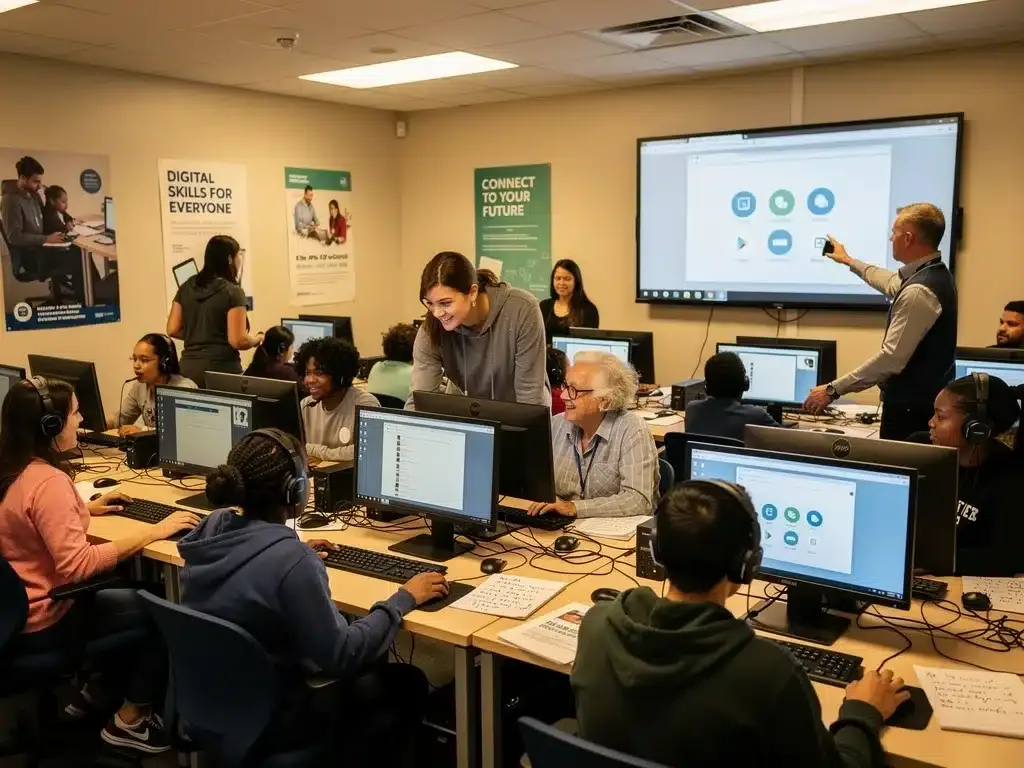
Public libraries, community centers, and non-profit organizations can establish learning hubs equipped with computers and internet access.
These spaces provide a safe and supportive environment for students who lack resources at home.
These hubs can also offer tutoring, digital skills workshops, and technical assistance, expanding the reach of educational support.
Collaborations between schools and these community organizations can create a seamless network of resources for students and families, further reducing the impact of the 2026 Digital Divide in Education.
Strategy 6: Policy Advocacy and Sustainable Funding
Long-term solutions for the digital divide require sustained policy advocacy and robust, consistent funding. Governments at all levels must prioritize digital equity in education through legislative action and dedicated budgetary allocations.
This involves advocating for policies that support broadband expansion, device provision, and digital literacy initiatives.
Securing sustainable funding mechanisms, beyond one-time grants, is essential for maintaining programs and adapting to future technological changes.
This includes exploring innovative funding models, such as public-private partnerships and philanthropic contributions, alongside traditional government appropriations.
Effective policy and funding ensure that efforts to bridge the digital divide are not temporary fixes but rather integral parts of a national commitment to educational equity.
This strategic approach is paramount for genuinely addressing the 2026 Digital Divide in Education.
Legislative Action for Digital Equity
- Advocating for federal and state legislation that mandates universal broadband access.
- Pushing for policies that allocate specific funding for educational technology and training.
- Ensuring that digital equity is a key consideration in all new education policies.
Policymakers need to understand the critical role technology plays in modern education and legislate accordingly.
This includes creating regulatory frameworks that encourage investment in digital infrastructure and support for schools in underserved areas.
Building a broad coalition of educators, parents, community leaders, and technology advocates can strengthen lobbying efforts and ensure that digital equity remains a high-priority issue on legislative agendas.
This collective voice is powerful in shaping the future of educational access.
Securing Long-Term Financial Commitments
- Establishing dedicated state and federal funds for digital equity programs.
- Encouraging philanthropic organizations to invest in educational technology initiatives.
- Exploring innovative financing models, such as bond measures or public-private funds.
Reliance on short-term grants can lead to instability and discontinuation of vital programs.
Long-term financial commitments are necessary to plan and implement comprehensive strategies effectively, ensuring that schools can consistently provide the resources students need.
Diversifying funding sources and creating sustainable budgetary lines for digital equity will ensure that progress made in bridging the divide is not lost due to fluctuating economic or political landscapes.
This financial stability is a cornerstone of successfully implementing the 2026 Digital Divide in Education.
| Key Strategy | Brief Description |
|---|---|
| Universal Broadband | Ensuring affordable, high-speed internet for all students, especially in underserved areas. |
| Device Provision | Providing every student with a dedicated learning device and necessary technical support. |
| Digital Literacy | Comprehensive training for students and educators on effective and responsible technology use. |
| Accessible Content | Developing engaging, inclusive, and culturally relevant digital educational materials. |
Frequently Asked Questions About the Digital Divide in Education
What is the 2026 Digital Divide in Education?▼The 2026 Digital Divide in Education refers to the persistent gap in access to technology, internet connectivity, and digital skills among students. This divide disproportionately affects low-income, rural, and minority students, creating educational inequities that hinder their academic progress and future opportunities.
Why is universal broadband access crucial for education?▼Universal broadband access is fundamental because reliable, high-speed internet is essential for modern learning. Without it, students cannot participate in online classes, access digital resources, or complete homework, intensifying disparities. It forms the base for all other digital equity efforts.
How can schools ensure device equity for all students?▼Schools can implement one-to-one device programs, providing each student with a laptop or tablet. Crucially, these programs must include robust technical support and maintenance services. This ensures devices remain functional and accessible, bridging a significant aspect of the digital divide.
What role does digital literacy play in closing the divide?▼Digital literacy is vital for students and educators to effectively use technology. It encompasses skills like critical evaluation of online information, cybersecurity, and responsible digital citizenship. Without these skills, access to devices and internet alone cannot guarantee equitable learning outcomes, making it a key strategy for the 2026 Digital Divide in Education: 6 Strategies to Ensure Equitable Access for All Students.
How can communities support digital equity in education?▼Communities can support digital equity through parental education programs, establishing community learning hubs with free access to devices and internet, and fostering partnerships between schools and local organizations. This collaborative approach creates a comprehensive support network for students and families.
Looking Ahead: Ensuring a Digitally Inclusive Future
The strategies outlined for the 2026 Digital Divide in Education: 6 Strategies to Ensure Equitable Access for All Students represent a comprehensive roadmap toward a more equitable educational future.
The persistent gap in technological access and digital literacy remains a critical challenge, demanding sustained attention and investment.
The success of these initiatives hinges on robust collaboration between federal, state, and local governments, educational institutions, private sector partners, and community organizations.
Moving forward, continuous evaluation of these strategies, coupled with adaptability to emerging technologies, will be crucial.
Policymakers must prioritize securing long-term funding and legislative support to ensure these programs are not merely temporary solutions but permanent fixtures in our educational system.
To explore more about how technological inequality impacts classrooms worldwide, read Outreach International’s Insights on the Digital Divide in Education.
The goal is to create an environment where every student has the opportunity to thrive in a digitally-driven world, regardless of their background.
As we approach 2026, the focus must remain on implementing these strategies effectively and equitably.
The future workforce and informed citizenry depend on our collective ability to bridge the digital divide, making digital inclusion a cornerstone of educational policy and practice across the nation.
This commitment will define the landscape of learning for generations to come, ensuring the 2026 Digital Divide in Education: 6 Strategies to Ensure Equitable Access for All Students becomes a success story.